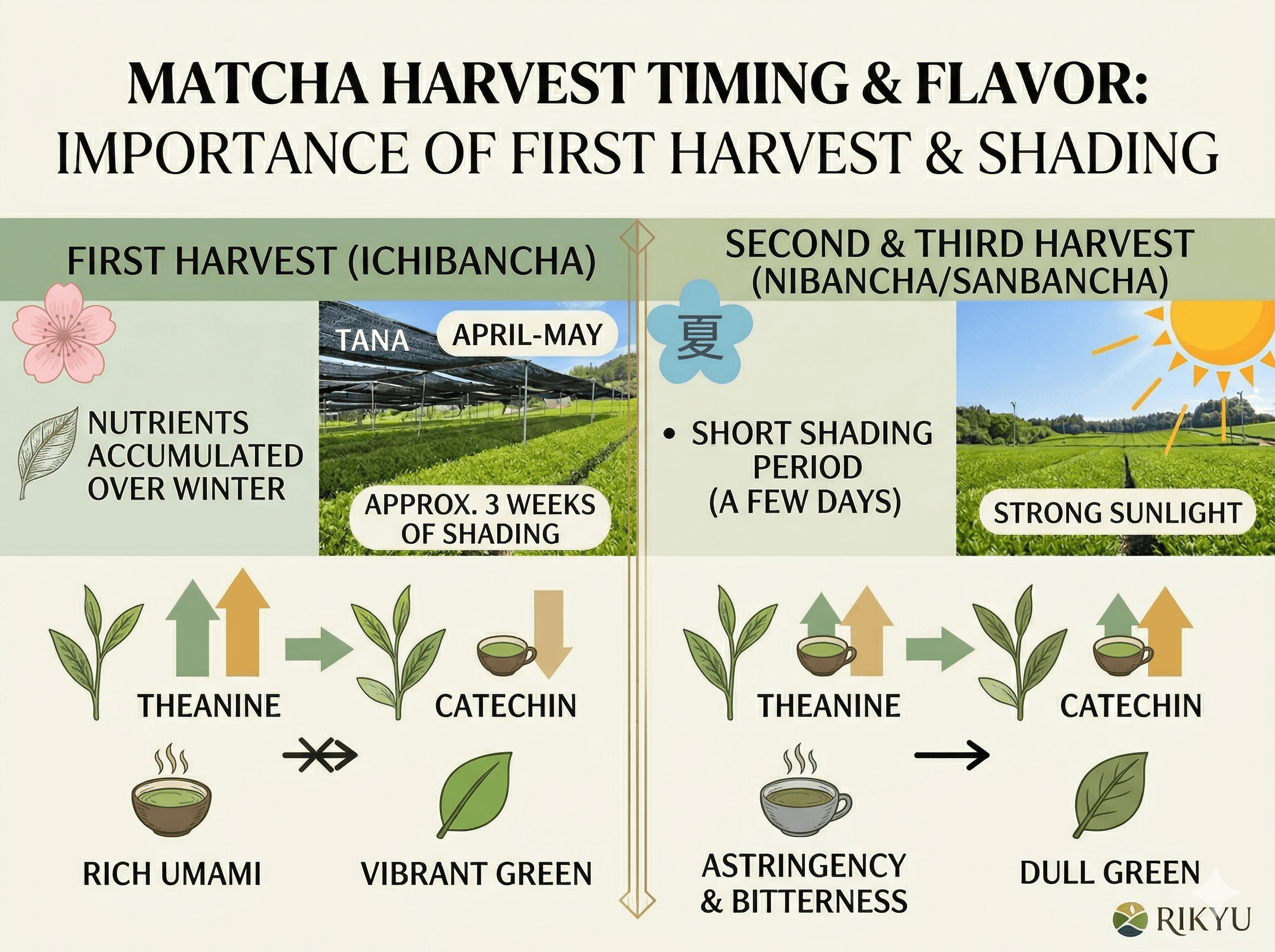
"Is first harvest always the best?" This is one of the most common questions we receive at RIKYU — and the answer is more nuanced than a simple yes.
The Japanese tea calendar is divided into multiple harvesting windows: Ichibancha (一番茶, first harvest), Nibancha (二番茶, second harvest), and Sanbancha (三番茶, third harvest). While harvest sequence does influence the chemistry of the leaf, the single most decisive factor for matcha quality is not when the leaves are picked — it's how long they were kept under shade before picking.
1. Why Shade Is the Key to Matcha's Flavor
Matcha is produced through a technique called kabuse saibai (被覆栽培) — shaded cultivation. In the weeks before harvest, the tea fields are covered with screens that block direct sunlight. This act triggers a critical biochemical change inside the leaf.
The primary umami compound in green tea is an amino acid called theanine (L-theanine). Under sunlight, theanine is progressively converted into catechins — the polyphenols responsible for bitterness and astringency. Shading blocks that conversion. The longer the plant is kept from direct light, the more theanine is preserved, and the deeper and sweeter the umami becomes.
☀️ Full sunlight → catechin synthesis increases → more bitterness and astringency
🌿 Shading (kabuse) → catechin conversion pauses → umami (theanine) is preserved
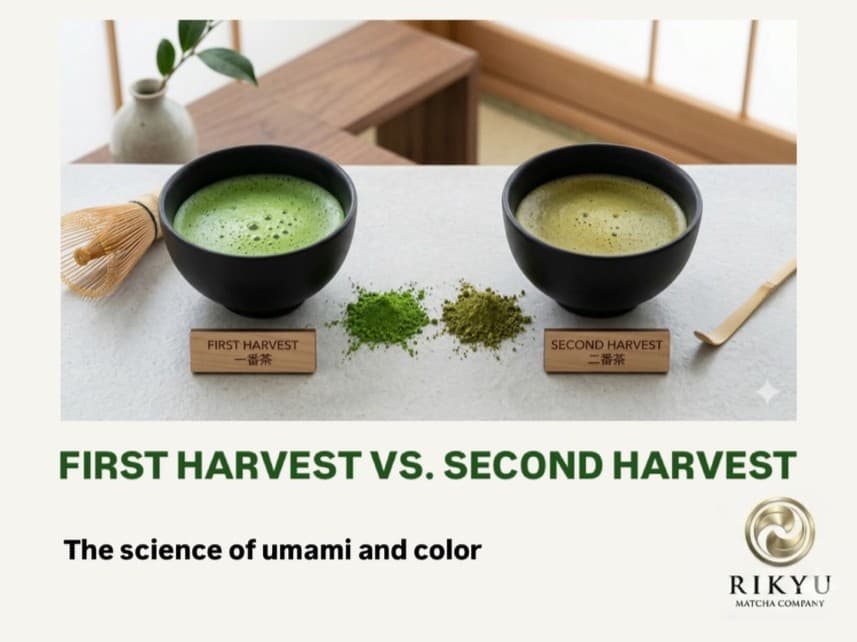
Shading also causes the plant to overproduce chlorophyll to capture what little light reaches it. This is why well-shaded matcha has that vivid, deep emerald green — not merely cosmetic, but a direct signal of careful shading management.
2. First Harvest — Ichibancha (一番茶)
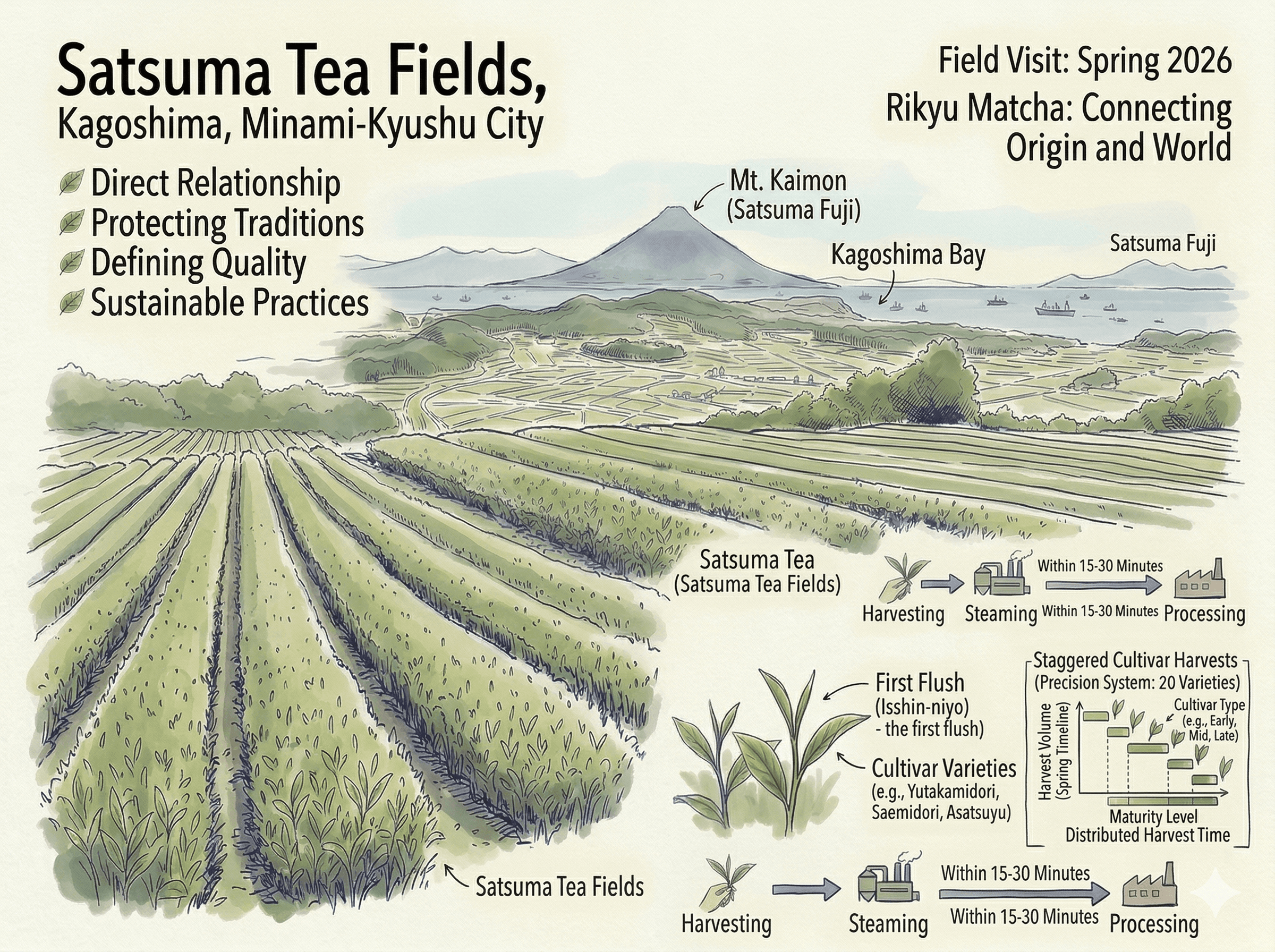
The first harvest arrives in late April to early May, as the tea plant wakes from its winter dormancy. All through the cold months, nutrients — primarily theanine — accumulate in the roots. When the new shoots finally emerge, they are naturally rich with that stored energy.
For matcha production, first-harvest plants are typically shaded for approximately three weeks before picking. This extended shading period, combined with the naturally high theanine content of the spring flush, produces a leaf with:
🍵 Rich, deep umami — theanine is at its seasonal peak
🌿 Low bitterness — catechin conversion has been suppressed for weeks
💚 Vibrant green color — maximum chlorophyll production from extended shading
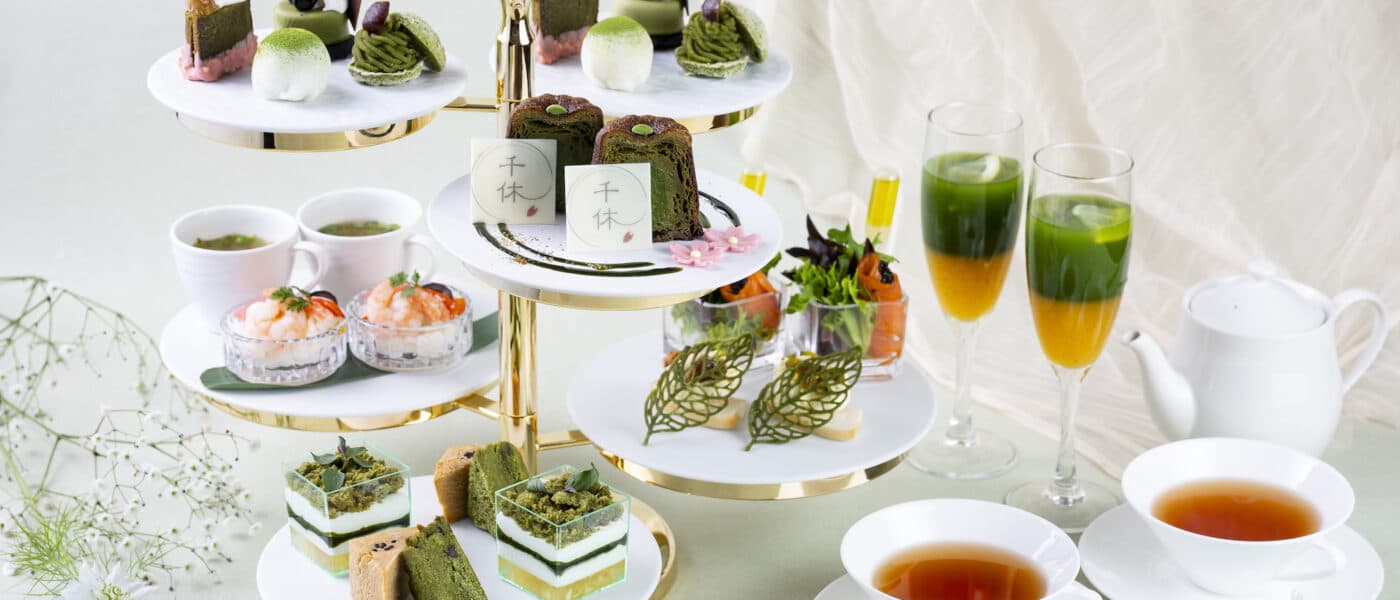
This is why at RIKYU, we recommend first-harvest matcha for ceremonial use. When matcha is served as the center of the experience — a pure bowl, an usucha (thin tea), a tasting flight — the softness, roundness, and lingering sweetness come directly from this theanine richness that only a full shading period can produce.
"If first-harvest matcha is the quiet depth of a tea house in spring — layered, sweet, and meditative — then the three weeks of shade are what built those walls around it."
3. Second & Third Harvest — Nibancha & Sanbancha (二番茶・三番茶)
After the first harvest, the plant regrows. New shoots emerge in June–July for the second harvest, and in late July–August for the third. These later flushes face a fundamental constraint: the interval between harvests is not long enough to allow for the same extended shading period.
In practice, shading for second- and third-harvest matcha can be as short as three days. The consequences are direct and measurable:
With minimal shade, theanine → catechin conversion proceeds largely uninterrupted
Summer sunlight is more intense than spring light, driving even more catechin synthesis
The resulting leaf is noticeably more bitter and astringent than first-harvest material
It is worth noting that even second and third harvest matcha retains more theanine than standard unshaded green tea (sencha) — any shading provides some benefit. But the gap between a three-week shade and a three-day shade is not marginal. It fundamentally changes the character of the cup.
From RIKYU's perspective: The misconception we encounter most often from international buyers is that "first harvest" is simply a marketing label. In reality, it reflects a specific agricultural reality. First-harvest matcha is not better because it arrives earlier — it is better because the shading can be longer. The winter-accumulated theanine and the extended kabuse period work together in a way that later harvests, constrained by the growing calendar, cannot replicate. When we source matcha for RIKYU, shading duration is one of the first questions we ask our producers.
4. Side by Side: The Three Harvests at a Glance
Characteristic1st Harvest2nd Harvest3rd HarvestSeasonLate Apr – MayJun – JulLate Jul – AugShading Duration~3 weeksDays – 1 weekMinimal (~3 days)Theanine / UmamiHigh ✦ModerateLowerCatechin / BitternessLowModerateHighColor VibrancyVivid green ✦ModerateDullerFlavor ProfileSweet, round, deep umamiBalanced; slight bitternessBitter-forward, astringentBest UseCeremony, pure bowlsLattes, everyday drinkingCooking, high-volume blends
Which Profile Fits Your Menu?
At RIKYU, we don't just supply matcha — we help you find the right harvest for the right application.
🍵 Team Ceremony: First-harvest, extended shade — for the bowl where matcha is the experience itself. The umami depth and sweetness justify the investment.
🥛 Team Latte & Everyday: Second-harvest — robust, full-bodied flavor that holds beautifully in milk. Many of the world's best matcha cafés run a two-tier sourcing strategy exactly along these lines.
One practical note: "ceremonial grade" is not a legally defined term, and its use across the industry is inconsistent. A better question to ask your supplier is: what was the shading duration for this lot? That single piece of information tells you more about what's in the bag than any grade label.
The next time you encounter a matcha described as "first harvest," it is worth pausing to consider what that actually required: a producer who managed careful shading discipline over three weeks in early spring, working with plants that had spent an entire winter accumulating the theanine now concentrated in those new shoots. It is not a label. It is a description of choices made long before the cup reaches the customer.
Curious to taste the difference for yourself?
We'd be happy to send samples of our first-harvest and second-harvest grades side by side — so you can experience the shading difference directly in the cup.
📩 Inquire for Samples: rikyu@teamfriends.co.jp