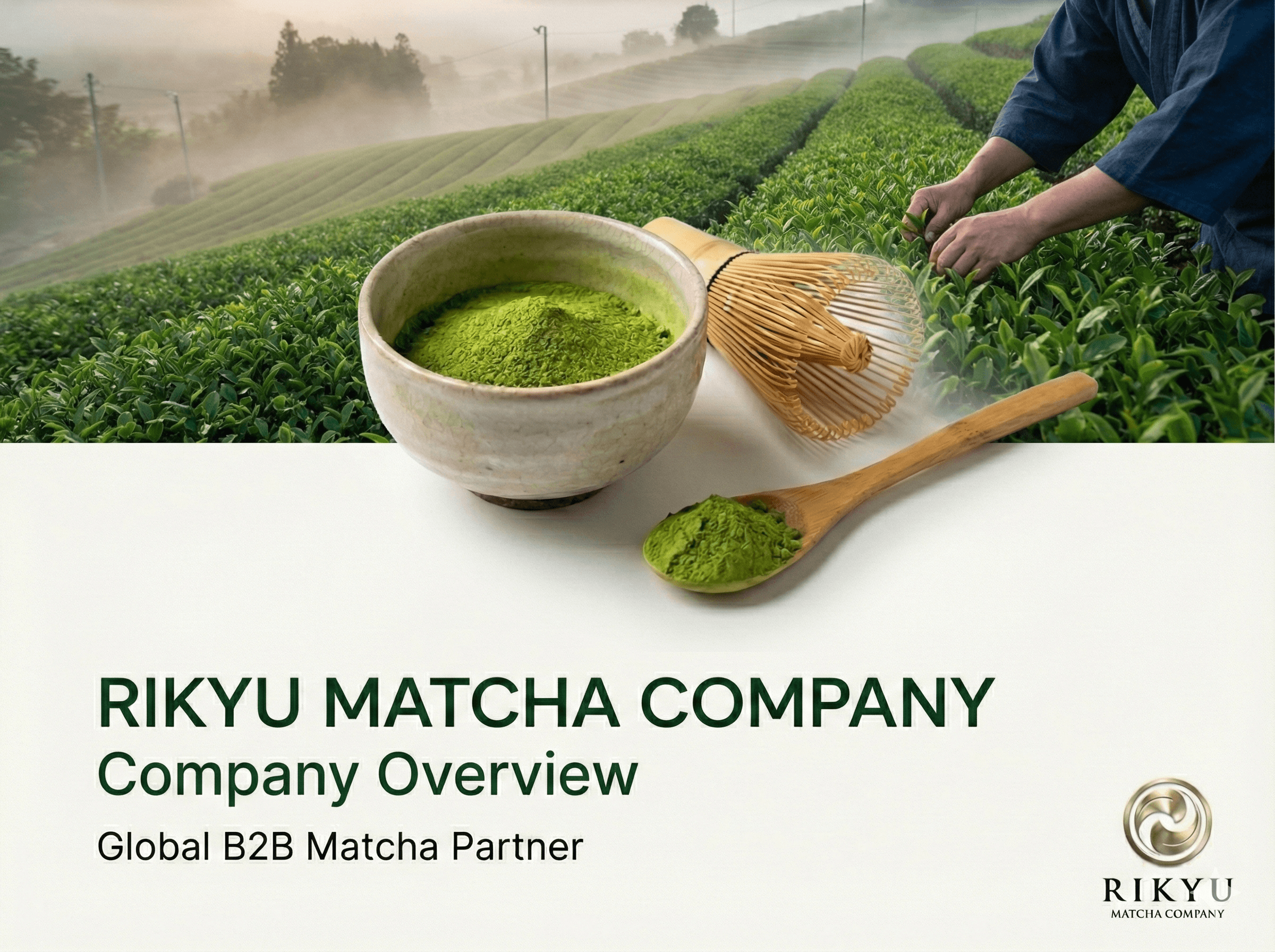
We built Rikyu Matcha around one conviction: that the best powdered Japanese tea deserved the same sourcing discipline as the best single-origin coffee. That conviction hasn't changed. But our lineup just expanded.
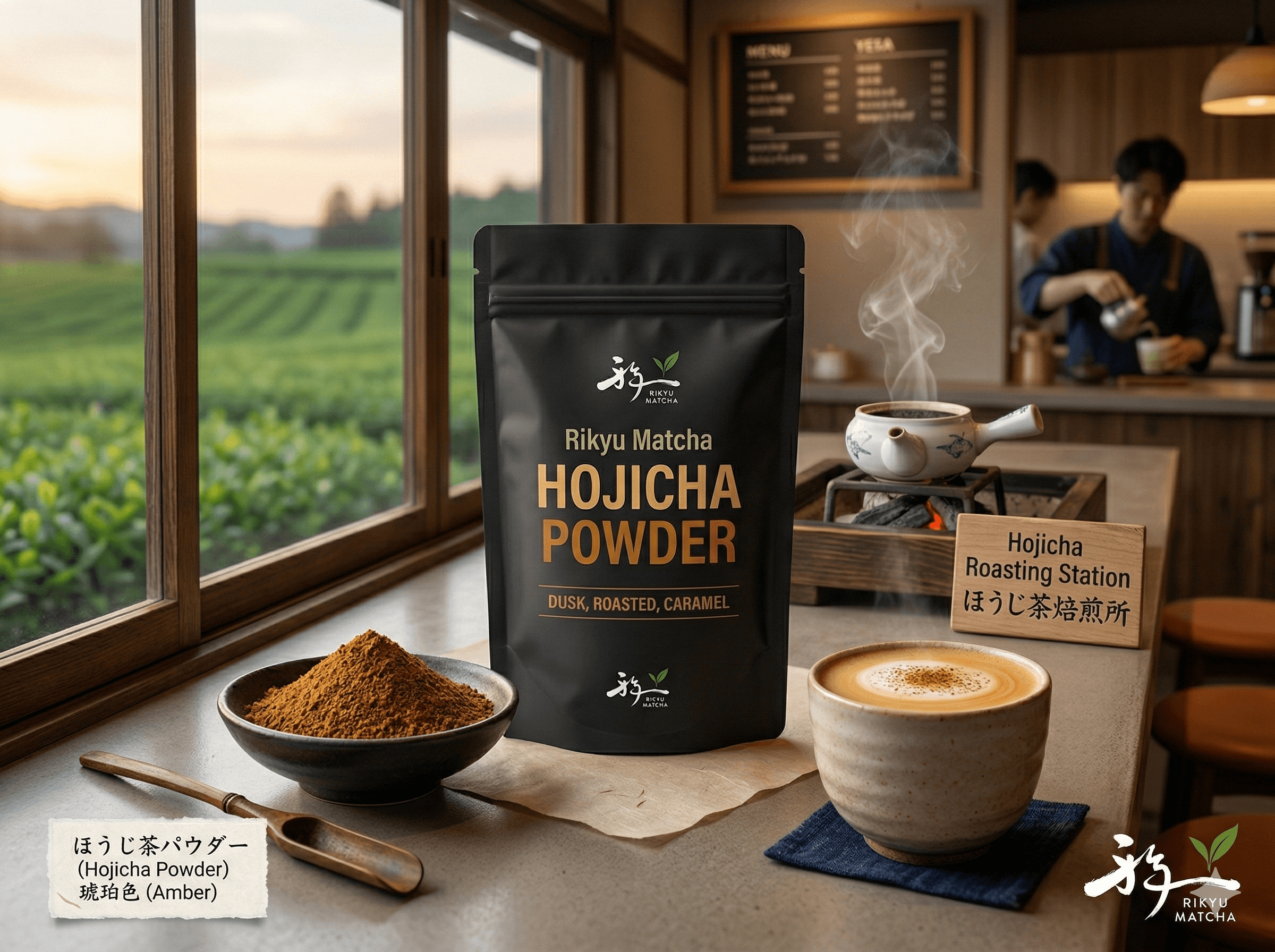
Starting this season, Rikyu Matcha is offering hojicha powder alongside our matcha range. Same sourcing philosophy. Same direct producer relationships. A completely different ingredient.
What Hojicha Actually Is
Hojicha begins as green tea — the same plant, the same fields. But where matcha is defined by everything we do to protect the leaf from heat and light, hojicha is defined by surrendering to it. The leaves and stems are roasted over high heat, typically in a porcelain pot over charcoal, until the chlorophyll breaks down and a new category of flavor emerges entirely.
The result is amber-colored, low in caffeine, and rich with roasted, caramel-sweet complexity. It tastes nothing like matcha. That's the point.
"If matcha is the dawn — clean, alive, electric — then hojicha is dusk. Slow heat. Long finish. The kind of cup that asks you to sit down."
In Japan, hojicha has been part of everyday tea culture for generations. It's the cup that appears after dinner, at the end of a long day, in the hands of someone who wants warmth without wakefulness. Outside Japan, it remains one of the most underrepresented flavors in specialty beverage — and one of the most immediately compelling once people taste it.
How It Differs from Matcha — Structurally, Not Just in Flavor
[ image — matcha powder (green) beside hojicha powder (amber) ]
Left: ceremonial-grade matcha. Right: Rikyu hojicha powder. The color difference reflects a fundamental shift in chemistry, not just processing.
This isn't a matter of preference. Matcha and hojicha powder differ at the molecular level.
The high-heat roasting process drives off chlorophyll — which is why hojicha loses its green. It also breaks down a significant portion of the caffeine content, reducing it to roughly one-fifth of matcha's level. The tannins that give green tea its astringency are similarly reduced, replaced by pyrazines and furans — the same roasted aromatic compounds that make coffee and toasted grain smell the way they do.
What this means for your menu: hojicha powder behaves differently in drinks. It disperses readily in warm milk without the aggressive whisking matcha requires. Its flavor doesn't compete with sweetness — it collaborates with it. Brown sugar, oat milk, vanilla, dark chocolate. Hojicha leans into all of them.
Our Sourcing Approach — The Same Standard, Applied to a New Leaf
When we source matcha, we visit the farms. We sit with the producers. We ask about cultivar selection, shading schedules, and milling temperature. We don't buy through brokers.
We brought that same approach to hojicha.
[ image — hojicha roasting facility / producer ]
Our hojicha producer partner, working the roast. The temperature and duration of each batch are calibrated by hand.
For hojicha powder, the key variables are different from matcha — but they're no less exacting. Roast temperature and duration determine whether the final powder is bright and lightly toasted or deep and smoky. Too short, and the sweetness doesn't develop. Too long, and you lose the tea character entirely. We worked directly with our producers to establish a roast profile that holds across batches — something you can actually build recipes around.
We also prioritized a stem-forward blend. Hojicha made primarily from kukicha-style stems roasts more evenly and produces a smoother, less astringent powder than leaf-only approaches. This is a deliberate choice, not a cost-saving one — stems carry a particular sweetness that defines the best hojicha.
Finally, we stone-mill to café grade. Traditional loose hojicha is a coarse product not designed for suspension in liquid. Our powder is milled fine enough to disperse cleanly in milk-based drinks, without grittiness or clumping.
Freshness — the Same Protocol as Matcha
Roasted teas are acutely sensitive to oxidation. The compounds created during the roasting process — the ones responsible for that warm, caramel aroma — are volatile. Exposure to air, light, and moisture degrades them faster than most people expect.
We package our hojicha powder under the same nitrogen-flush protocol we use for matcha: sealed immediately after milling, inert atmosphere, opaque packaging. From the moment it leaves the roasting facility to the moment it reaches your café, that toasted character is preserved.
Where Hojicha Fits on Your Menu
The most natural entry point is the evening menu. A hojicha latte at 8 PM is exactly what customers are looking for when they want something ceremonial and satisfying — without the caffeine that will keep them up until 2 AM. It fills a gap that herbal teas and decaf coffee never quite manage.
Beyond drinks, hojicha powder opens up pastry and dessert applications that neither cocoa nor coffee quite replicate. The toasty, caramel note integrates into glazes, creams, and custards with unusual elegance. Autumn and winter menus especially benefit — the flavor profile is warm in a way that feels seasonal without being gimmicky.
And for cafés already running matcha, hojicha becomes a natural companion on the menu board. Two powders, one philosophy — different enough to feel like a genuine choice, similar enough in preparation that your team doesn't need to learn an entirely new skill set.
Whether you're already working with our matcha or encountering Rikyu for the first time, we'd be glad to send you a sample of both powders side by side. It's the fastest way to understand what we mean when we say the difference is structural, not superficial.
📩 Email us: rikyu@teamfriends.co.jp